An office kitchen cleaning task list should say what the cleaner does, what staff do and how often each job happens. Without that split, dishes, food and fridge contents become recurring points of confusion. Start with the surfaces and appliances in the room, then assign responsibilities that fit how the office is actually used.
Inventory the kitchen before setting tasks
List worktops, sinks, taps, splashbacks, tables, floors, bins and cupboard exteriors. Add the outside of the fridge, microwave, dishwasher and other appliances if present. A kitchenette used by five people may have only a few surfaces; a large shared kitchen may need several zones and more frequent bin checks.
Note delicate materials and manufacturer instructions. A stone worktop, treated timber table or specialist floor may restrict which products can be used. Tell the provider about known damage or leaks so cleaning is not confused with repair work. Inside cupboards and appliances should be named separately: wiping a fridge door is not the same task as emptying and cleaning the fridge interior.
Set the staff rules first
Decide whether employees must rinse and load their dishes, clear food from tables, label fridge items and wipe spills as they happen. These are workplace rules for the office to communicate. A cleaner should not have to decide which lunch belongs to whom or whether unlabelled food can be thrown away.
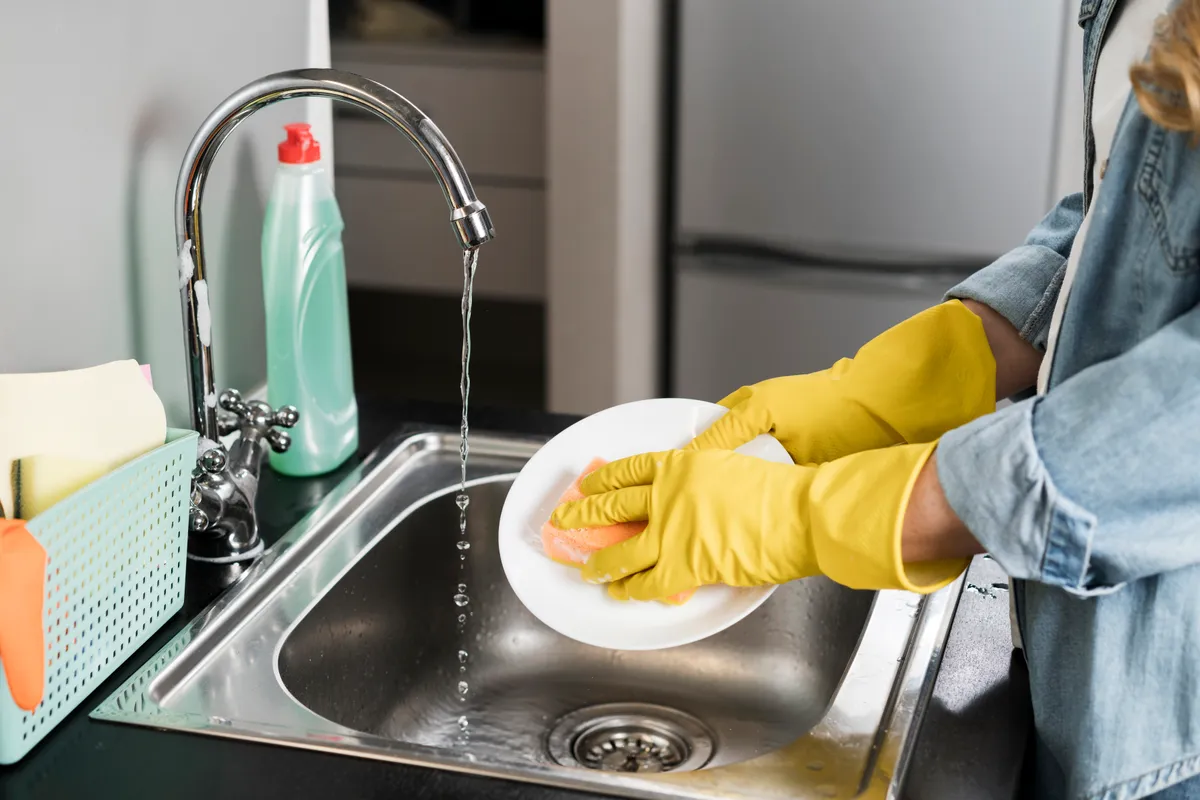
If the office wants dishwashing or food disposal included in the cleaning contract, describe exactly what is authorised. For example, washing a few communal mugs is different from handling personal dishes left in a sink. A regular fridge-clear day needs notice to staff and a named person who approves disposal.
Separate every-visit work from periodic work
Tasks such as accessible worktops, the sink, floors and bins may be needed at each visit, depending on use. Appliance interiors, cupboard shelves and high-level surfaces can be put on a separate weekly or monthly line. Record the frequency beside each task; the phrase "kitchen cleaned" does not explain what happens on a Tuesday versus a monthly deep clean.
Consider the time of day. A cleaner arriving while staff prepare lunch may not be able to reach the sink or tables. A visit after the busiest period can be more practical, but bins and spills may still need attention between visits. The office contact should own that between-visit response.
Define supplies and reporting
List soap, paper towels, bin liners and other consumables. Say who buys them, where spares are stored and who reports a low stock level. Ask whether cleaning products and equipment are provided by the cleaner or the office. A task can be missed simply because the right supply was not available.
Give the cleaner a contact for a blocked sink, leaking tap, broken appliance or pest concern. Reporting a fault is useful; repairing it belongs to the appropriate facilities person. Decide how the cleaner records an inaccessible surface or a task delayed by staff belongings so the office can resolve the cause.
If staff leave food or dishes in the way
Agree a rule before it happens. The cleaner may wipe around personal items, ask the office contact to clear them or skip a blocked surface and record the reason. The right choice depends on the contract and the workplace policy. It should not be left to the cleaner to decide whether a person's lunch can be moved or discarded.
Share the rule with employees in plain language: which surfaces should be clear by the cleaning time, what happens to unlabelled fridge items and who can approve disposal. If the same obstruction repeats, the office manager can change the staff process or the cleaning time. Adding more cleaning minutes will not fix an access problem by itself.
Example of an office kitchen task line
A practical specification might say: "After 6 p.m. on weekdays, wipe accessible worktops, sink and taps; clean the outside of the microwave and fridge; empty the two labelled bins; clean the exposed floor. Staff place their dishes in the dishwasher before 6 p.m. The office manager handles food disposal each Friday." This separates cleaning from staff behaviour and gives the provider a defined finish.
The example should be adapted to the room. If the microwave interior or fridge shelves are required, add them with a frequency and preparation rule instead of assuming they are covered by the exterior task.
Turn the list into an inspectable specification
- Name each surface and appliance exterior included.
- State who handles dishes, personal food and fridge clearance.
- Put a frequency beside every task.
- Confirm visit timing and between-visit spill response.
- Assign consumables, storage and the issue-reporting contact.
- Review the list after changes in staff numbers or kitchen use.
This kitchen list can sit within a wider commercial cleaning contract specification. For the broader service scope, see Bedeen's office cleaning service; the kitchen tasks still need to be agreed for the particular workplace.