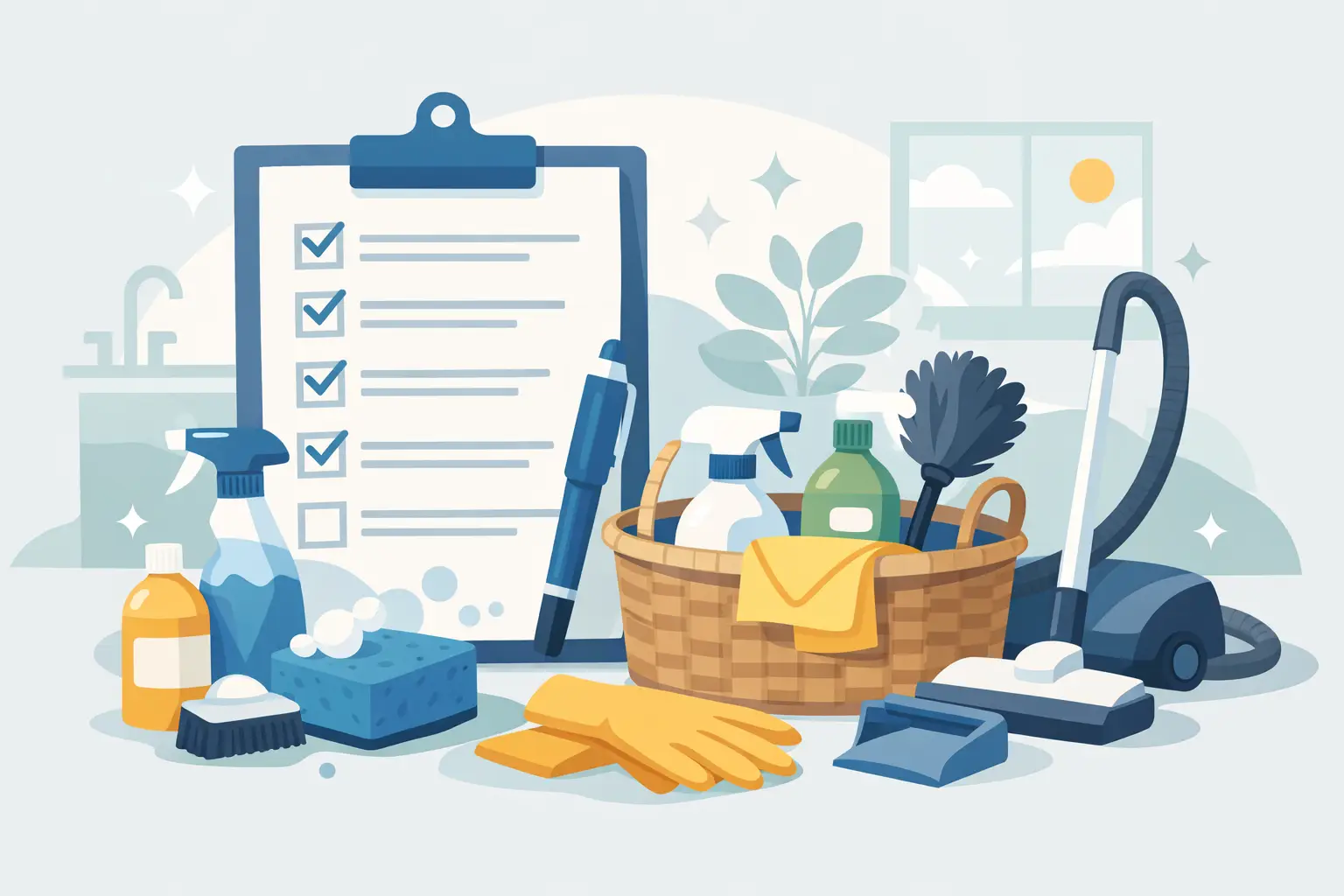
A home rarely gets messy all at once. More often, it slips bit by bit - fingerprints on doors, crumbs under the table, limescale around the taps, dust building where nobody looks until the sun catches it. That is why a domestic cleaning checklist printable can be so useful. It turns cleaning from a vague weekend task into a clear routine that is easier to follow, easier to share, and easier to keep consistent.
For busy households, tenants preparing for inspections, landlords between occupiers, and property managers trying to keep standards steady, a checklist does more than save time. It helps make sure the right jobs are done at the right interval. It also reduces the usual problem of over-cleaning some areas while completely missing others.
Why a domestic cleaning checklist printable works
Cleaning tends to fall apart when there is no structure behind it. Most people remember the obvious jobs such as vacuuming or wiping the kitchen worktops, but less visible tasks often get delayed for weeks. Skirting boards, internal doors, extractor fans, light switches and behind furniture are common examples. A printable checklist gives every task a place.
It is also practical because paper works well in real homes and working properties. You can keep a copy on the fridge, inside a utility cupboard, in a landlord handover file or as part of a short-let turnover pack. Digital reminders can help, but a printed list is often quicker for checking off as you go, especially when more than one person shares the work.
There is another benefit too. A checklist creates a standard. That matters if you want your home to stay consistently tidy, if you manage rental properties, or if you need to show that cleaning has been carried out properly between occupiers or guests. In those cases, cleaning is not just about appearance. It is about presentation, hygiene and readiness.
What to include on your domestic cleaning checklist printable
The most useful checklist is not the longest one. It is the one you will actually use. That usually means dividing jobs by frequency rather than putting everything into one overwhelming page.
Daily tasks
Daily cleaning should focus on hygiene, presentation and preventing build-up. In most homes, that means wiping kitchen surfaces, washing up or loading the dishwasher, cleaning the hob after use, emptying bins if needed, and giving the sink a quick clean. In the bathroom, a fast wipe of the basin, taps and toilet helps stop marks and residue from setting in.
Living areas and bedrooms do not usually need a full clean every day, but a quick tidy makes a difference. Straightening cushions, folding throws, putting away clothes and clearing surfaces keeps the home easier to manage. If you have pets or young children, you may also want to include a brief vacuum of high-traffic areas.
Weekly tasks
Weekly jobs cover the cleaning that keeps a home looking maintained rather than simply lived in. This is where most of the visible difference happens. Vacuuming throughout the property, mopping hard floors, dusting furniture, cleaning mirrors, changing bed linen and cleaning bathrooms properly all belong here.
In the kitchen, weekly work should go beyond a quick wipe. Cupboard fronts, splashbacks, the microwave, small appliances and the outside of the fridge often need attention. Bathrooms usually need descaling around taps and shower screens, along with more thorough cleaning of the toilet, bath and shower area.
If the property is occupied by tenants, used as a holiday let, or being prepared for viewings, weekly checks are especially useful because standards can slip quickly in bathrooms and kitchens.
Monthly and less frequent tasks
This is the section people forget, yet it often determines whether a property feels genuinely clean. Monthly jobs might include wiping skirting boards, cleaning internal glass, dusting light fittings, cleaning behind and under movable furniture, wiping doors and frames, and vacuuming upholstery.
Some tasks may fit better every two or three months depending on the household. Oven cleaning, carpet spot treatment, internal window cleaning and deep descaling are good examples. A family home with children will need different timing from a one-bedroom flat occupied by a single professional. The checklist should reflect that.
Room-by-room structure makes cleaning easier
Some people prefer a time-based checklist, while others work better room by room. If you are printing a list for regular use, a room-based format is often more practical because it mirrors how cleaning is actually done.
In the kitchen, list worktops, cupboard fronts, sink, taps, hob, splashback, appliances, bin area and floor. In the bathroom, include the toilet, basin, taps, shower screen, bath, tiles, mirrors and floor. Bedrooms can cover dusting, bed linen, wardrobes, mirrors and flooring. Living rooms might include surfaces, soft furnishings, electronics, internal glass and floors.
Hallways, stairs and landings deserve their own section too. They are heavily used but often cleaned last and rushed. Yet they shape the first impression of any property, whether it is your own home or a rental being prepared for new occupants.
When a printable checklist needs to be more detailed
A basic household routine and a property handover clean are not the same thing. That is where many generic checklists fall short. They are fine for weekly upkeep but too vague for deeper or higher-stakes work.
For example, an end of tenancy clean usually needs closer attention to internal cupboards, limescale removal, degreasing, appliance cleaning, switches, sockets, doors, frames and flooring edges. A short-let turnaround may also need linen checks, replenishment checks and a final presentation review. A landlord or host using a simple domestic list may still miss the details that matter to incoming tenants or guests.
That does not mean every checklist should be long and technical. It means the right checklist depends on the job. For a family household, simplicity helps people stay on track. For managed properties, more detail protects standards.
How to make your checklist realistic
The best checklist fits the home, the people using it and the time available. If it takes two hours to complete your so-called daily list, it will not last. If the weekly section is too light, the home will never feel properly clean.
A practical approach is to start with non-negotiables. Kitchens and bathrooms usually come first because they affect hygiene most. Floors, bins and dust on visible surfaces follow close behind. Then add the tasks that matter to your property, such as pet hair removal, stair vacuuming or keeping glass doors clear of fingerprints.
It also helps to think about who will use the list. A homeowner may want a simple household plan. A landlord may need a property reset checklist between tenancies. An Airbnb host will need a tighter, guest-focused version. The format can stay similar, but the detail should change.
A domestic cleaning checklist printable is useful, but not always enough
There is a point where a checklist stops being the solution and starts being a reminder that the work needs more time, better equipment or professional support. Deep cleaning an oven, restoring a neglected bathroom, refreshing carpets or bringing a property back up to standard after a tenancy can be difficult to manage with a simple printed sheet.
That is especially true when time is short. Moving dates, guest changeovers, property inspections and family schedules do not leave much room for catching up on postponed cleaning. In those cases, a checklist still has value because it helps define the scope of work, but the job itself may need experienced hands.
For homes and managed properties around Ipswich, that balance matters. Regular upkeep prevents bigger problems, but occasional deep cleaning is often what keeps a property in genuinely good order. Bedeen Cleaning Services often supports customers who have kept on top of the basics but need help with the more demanding work that sits outside a normal weekly routine.
Keeping the checklist working over time
A checklist should not be treated as fixed forever. Homes change. Tenants move in and out. Children get older. Pets arrive. Working patterns shift. The list that suited your property six months ago may now be too detailed or not detailed enough.
Review it from time to time and ask a simple question: are the right jobs being done often enough to keep the property clean, presentable and manageable? If the answer is no, adjust the list rather than abandoning it. Sometimes one extra monthly task can prevent a much larger clean later on.
It is also worth leaving a small space on the printable for notes. That gives you room to flag issues such as mould spots, carpet marks, low stock of cleaning products or areas that need a deeper clean next time. Over time, those notes make the checklist more useful because it reflects the actual property, not an ideal version of it.
A good cleaning routine does not need to be complicated. It just needs to be clear enough to follow and practical enough to keep using. When your checklist matches your home and your schedule, cleaning becomes less of a catch-up job and more of a steady, manageable part of keeping the property ready for everyday life.