Preparing an oven for a professional clean is mainly about sharing the appliance details and giving the cleaner safe, unobstructed access. You do not need to dismantle the oven or apply strong products beforehand. A few notes about the model, its condition and the work you want done make it easier to agree the right scope before the appointment.
Identify the appliance and the parts you want cleaned
Record whether you have a single or double oven, a range cooker or another appliance. Note the make and model if the label or manual is easy to find. Tell the provider whether the hob, extractor, grill, shelves, trays and removable racks are part of your request. "Clean the oven" can mean different things to different people, especially when an extractor or separate hob is nearby.
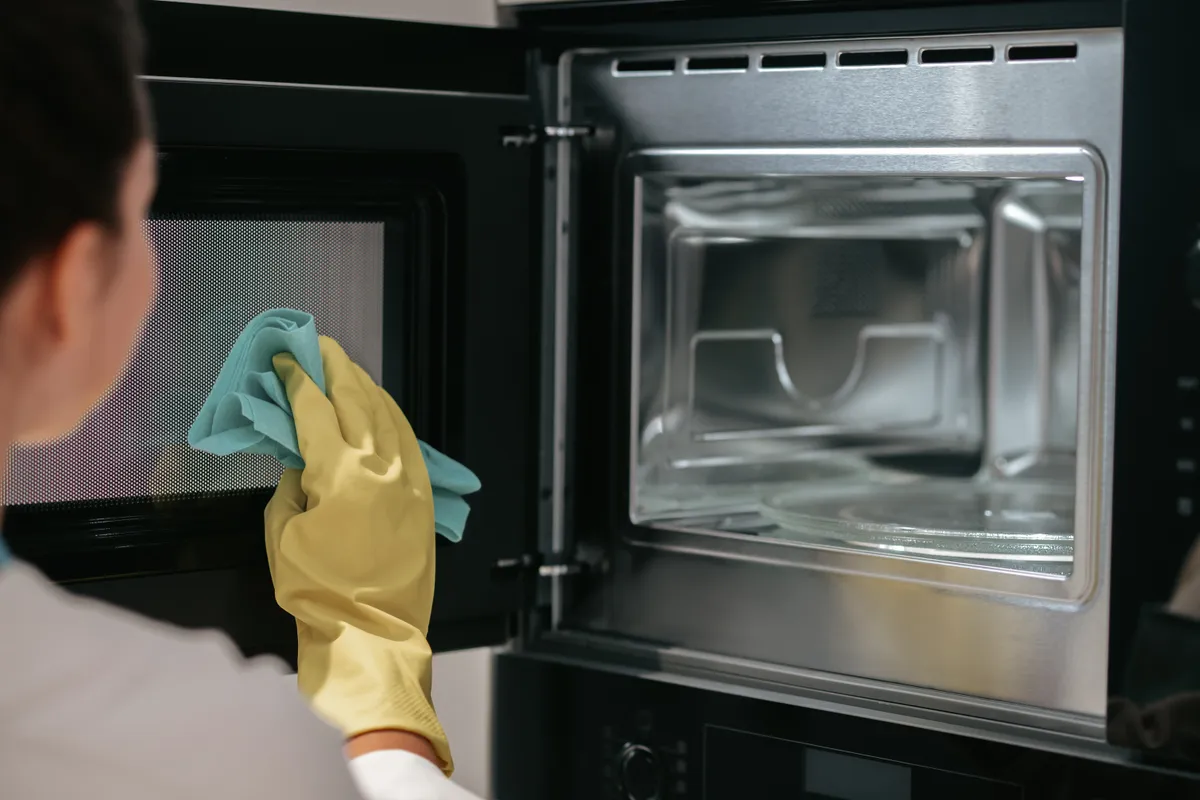
If you are moving out or preparing a rental, check the inventory or handover list for any appliances that need attention. A separate microwave or freestanding cooker should be named rather than assumed to be included. Ask for a written list of the appliance parts covered by the quote.
Explain existing damage and previous products
Tell the cleaner about a loose door seal, damaged glass, broken control, rust, flaking coating or another defect you already know about. Cleaning may reveal a mark that was previously hidden by grease, but it will not repair a worn surface or a faulty part. A photograph can help establish the condition before work starts.
Also mention recent use of a commercial oven cleaner, a self-cleaning cycle or any product left inside. Combining chemicals or working on a hot appliance can be unsafe. Do not add another treatment just before the visit. If the appliance manual gives restrictions for catalytic liners, enamel, glass or other surfaces, make it available so the method can be discussed.
Make the kitchen accessible
Clear small items from the surrounding worktop and remove anything stored directly in front of the oven. Keep a reasonable route from the entrance to the kitchen. Ask the provider what space, power or water access it needs rather than guessing. If the cleaner has to move a heavy appliance, that should be agreed in advance; do not pull a built-in unit out yourself.
Plan for the oven to be cool when the visit begins, following the provider's instructions. Keep children and pets away from the working area. If your kitchen is shared with other occupants, let them know when the appliance will be unavailable. The cleaner can then work without a meal preparation schedule crossing the appointment.
Set expectations for the finish
Heavy grease and carbon deposits can take more work than a lightly used oven. Ask whether the price reflects the appliance condition and whether any part may need extra time. Some staining, corrosion, damaged coatings or discolouration may remain after cleaning. A clear discussion beforehand is better than an assumption that every surface will look new.
At the end, inspect the agreed oven, racks and other included parts with the cleaner. Ask whether any part must dry, be refitted or be checked before the appliance is used again. Follow the appliance manual and the cleaner's aftercare advice for that specific job. If a defect is noticed, arrange repair separately rather than relying on cleaning to solve it.
If the oven has a special lining or cleaning programme
Some appliances have catalytic panels, self-cleaning cycles or manufacturer restrictions on removable parts. Do not assume a standard process is suitable for every model. Share the manual or model number and ask how the provider will handle those surfaces. If the cleaner cannot confirm an appropriate method, it is better to leave a part untreated than risk damaging a coating.
If you have recently run a self-cleaning cycle, tell the team what remains. Ash or residue may need a different discussion from baked-on grease, and a cycle does not necessarily clean the door edges, racks or surrounding hob. Keep the conversation about the actual appliance rather than comparing the result with a generic before-and-after photograph.
Example information to send with a booking request
A useful note might read: "Single built-in electric oven, two racks and one grill tray. Please quote for the oven interior and door; the hob and extractor are separate. The lower door seal is loose, and a supermarket cleaner was used last week. Parking is available outside after 10 a.m." This gives the provider the appliance, parts, condition and access details needed for an informed conversation.
You do not need to diagnose the fault or decide the cleaning method yourself. The note helps the team ask the right follow-up questions, such as the model number or a photograph of the seal, before confirming the job.
Appointment checklist
- Share the oven type, make and model where available.
- Name the hob, extractor, grill, trays and racks you want included.
- Point out damage, unusual surfaces and products already used.
- Clear access and follow the provider's cooling instructions.
- Keep the working area free of children, pets and meal preparation.
- Check the agreed parts and ask for aftercare before the cleaner leaves.
For service scope and a quote, see Bedeen's oven cleaning service. This preparation guide is for the period before and immediately after an appointment; it is not a do-it-yourself cleaning method.