A property can look tidy while still needing far more than a quick wipe and vacuum. Dust settles behind furniture, grease builds up around cooking areas, and bathrooms develop limescale in places that routine cleaning may not reach. So, what does a deep clean include? It is a detailed, one-off service that focuses on the built-up dirt, overlooked surfaces and high-use areas that need proper attention.
A deep clean is not simply a longer regular clean. It is designed to reset a home, rental property or workplace to a higher standard of cleanliness. The exact scope depends on the property, its condition and the reason for the clean, but a professional service should clearly explain what is included before work begins.
What Does a Deep Clean Include in Every Property?
Most deep cleans begin with the fundamentals: thorough dusting, vacuuming and mopping throughout accessible areas. Cleaners pay attention to skirting boards, internal doors, light switches, door handles, window sills, radiators and reachable ledges - the places where dust, fingerprints and grime often accumulate.
Floors are treated according to their material and condition. This can mean careful vacuuming around edges, mopping hard flooring and targeting marks or dirt in high-traffic zones. Cobwebs are removed from corners and ceilings where accessible, while bins are emptied and their surrounding areas wiped down.
The purpose is not just to make the property look presentable for a day. It is to remove the dirt that regular upkeep can gradually miss, leaving rooms fresher, more hygienic and easier to maintain afterwards.
Kitchen Deep Cleaning Tasks
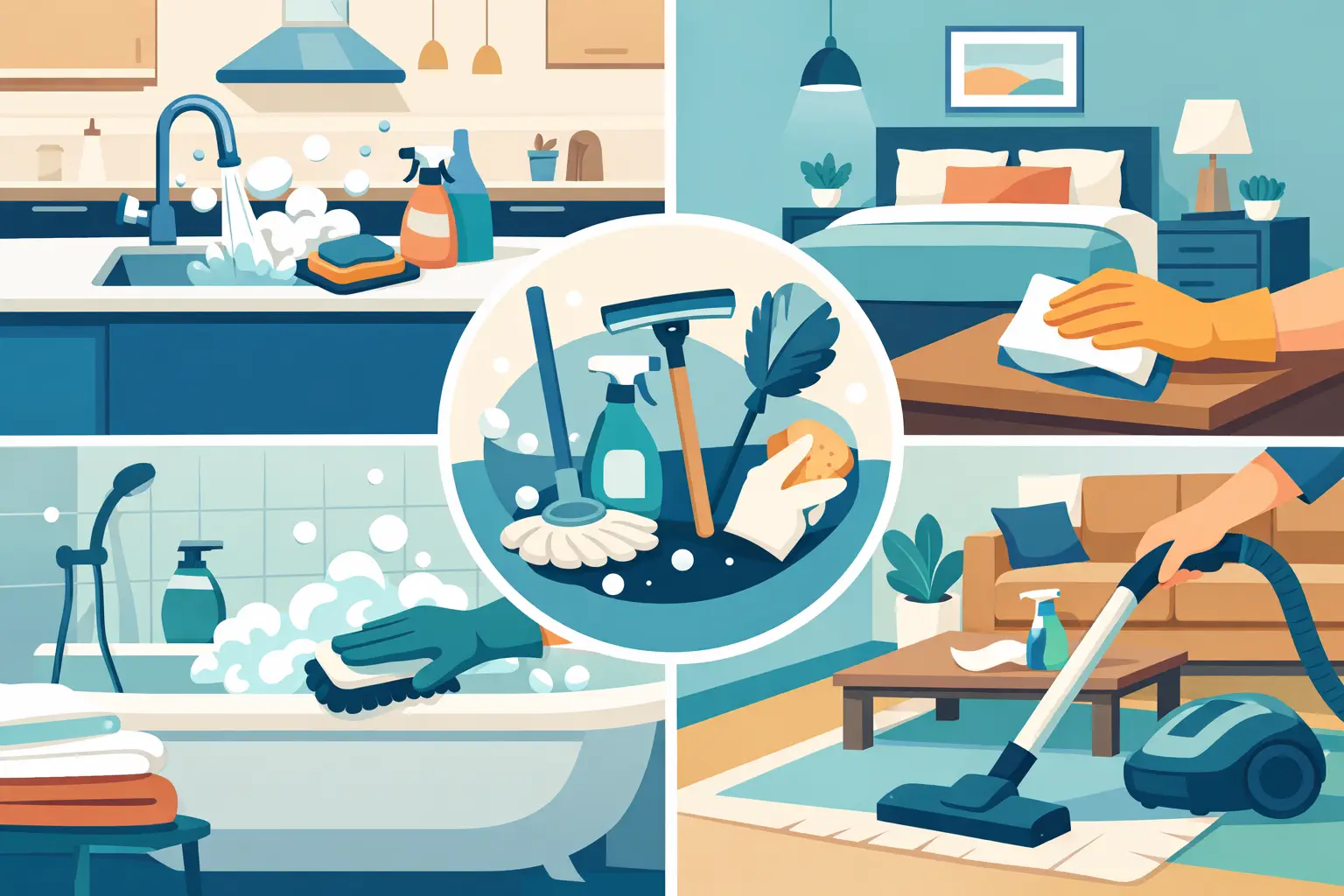
Kitchens normally require the most detailed work because they combine food preparation, moisture and grease. A deep clean generally includes cleaning and sanitising worktops, sinks, taps, splashbacks and the outside of cupboards and drawers. Handles, switches and frequently touched surfaces receive particular attention.
Appliance exteriors are cleaned, including the fridge, microwave, dishwasher and washing machine where present. The hob, extractor area and surrounding tiles are degreased to remove cooking residue. The level of grease removal depends on how long it has been allowed to build up, so heavily used kitchens may need more time than a lightly used one.
Inside appliances is often a separate matter. An internal oven clean, for example, can be included when agreed in advance, but it should not be assumed as part of every standard deep-clean package. The same applies to the insides of cupboards, fridges and freezers. These areas can be cleaned when emptied and requested, but they need to be confirmed during booking.
Bathrooms and Toilets
A proper bathroom deep clean tackles both visible dirt and the residue that develops around water fixtures. Toilets, basins, baths, showers, taps, tiles and shower screens are cleaned and sanitised. Limescale is treated where possible, particularly around taps, shower heads and glass screens.
Attention is also given to grout lines, plugholes, toilet bases, bathroom cabinets on the outside, mirrors and the floor. Build-up around sealant and shower trays can be stubborn. Cleaning can improve the appearance of these areas considerably, but it cannot always remove permanent staining, damaged sealant or mould that has penetrated materials.
That distinction matters for landlords, tenants and property managers. A deep clean can restore cleanliness, but repairs, regrouting or sealant replacement may still be needed where surfaces are worn or deteriorated.
Bedrooms, Living Areas and Hallways
In bedrooms and living spaces, the work focuses on dust removal and cleaning the surfaces that become overlooked during weekly routines. Furniture is dusted externally, with accessible areas behind and underneath cleaned where it is safe to move items. Skirting boards, shelves, picture rails, window sills and doors are all addressed.
Upholstered furniture can be vacuumed as part of the room clean, but stain removal or a full fabric treatment is usually a separate upholstery-cleaning service. Similarly, vacuuming a carpet is different from professional carpet cleaning. If carpets have embedded soil, pet hair, spills or lingering odours, a dedicated carpet clean may be the better option.
Hallways and entrances deserve just as much care. They often carry in mud, dust and moisture from outside, particularly during wet Suffolk weather. Deep cleaning these areas helps improve the first impression of a property and reduces the dirt carried into other rooms.
Windows, Internal Glass and High-Touch Areas
Internal glass, mirrors and reachable window sills are commonly included in a deep clean. Interior window cleaning may also be available, depending on access and what has been agreed. External window cleaning is normally booked separately because it requires different equipment, safe access arrangements and weather conditions.
High-touch points are cleaned throughout the property. This includes handles, switches, banisters, remote controls where requested, and other surfaces regularly used by occupants, staff or guests. This is particularly valuable in shared homes, offices, short-let properties, schools and customer-facing premises.
What Is Usually Not Included?
Clear expectations prevent disappointment. A deep clean generally does not include removing large amounts of rubbish, moving heavy furniture, cleaning hazardous waste, dealing with pest infestations or carrying out repairs. These tasks may require specialist services, additional time or safe disposal arrangements.
Deep cleaning also cannot guarantee the removal of every stain, scratch, burn mark or discolouration. Some marks are permanent damage rather than surface dirt. A reliable cleaning company will assess the condition of the area and use suitable products, but aggressive treatment can damage delicate surfaces, paintwork, stone or fabrics.
Outside spaces, garages, lofts and external windows are also commonly excluded unless they are specifically added to the job. For commercial premises, specialist requirements such as clinical cleaning protocols, high-level cleaning or post-construction debris removal should be discussed before a quotation is provided.
When Is a Deep Clean the Right Choice?
A deep clean is useful when a property has fallen behind on regular cleaning, after building work, before guests arrive, or when preparing for a new tenant or owner. It is also a sensible starting point before beginning a regular domestic or office cleaning schedule. Once the property has been brought up to standard, routine visits are more effective and easier to manage.
For end-of-tenancy situations, a deep clean may form part of the required work, but an end-of-tenancy clean is usually more specific. It is designed around the condition of the whole property and the expectations of landlords, letting agents or incoming occupants. It may include internal appliances, cupboards and other detailed tasks that need to be agreed against the property checklist.
Airbnb hosts and serviced accommodation managers may need a different approach again. A changeover clean focuses on guest-ready presentation, linen, consumables and quick turnaround, while a periodic deep clean deals with the areas that short stays can gradually wear down. Combining both helps protect reviews and maintain a consistent standard.
How to Prepare for a Professional Deep Clean
The best results come when cleaners can access the surfaces that need attention. Clearing worktops, floors and shelves of personal belongings allows more time to be spent on cleaning rather than moving items. If internal cupboards, fridges or appliances are included, emptying them beforehand is especially helpful.
Let the cleaning team know about fragile items, parking restrictions, pets, access arrangements and any priority areas. If a particular stain, odour or build-up is concerning you, mention it when booking. This allows the right products, equipment and time to be planned for the job.
Bedeen Cleaning Services supplies its own equipment and cleaning products, including safe and eco-friendly options where suitable. A clear conversation before the visit helps ensure the service matches the property rather than relying on a one-size-fits-all checklist.
A deep clean should leave more than a pleasant scent. It should give you a cleaner starting point, greater confidence in the condition of the property and a realistic plan for keeping it that way.